Sunday, June 10, 2007

Broken: A Reflection on Domestic Violence

Broken
A Reflection on Domestic Violence

Broken plans
Broken table
Broken bones
Broken dreams
Broken heart
Broken image of the girl I knew
Picking up the pieces…

While reading the stories of battered women, I experienced an intense realization. I recognized something familiar in their stories, something that resembled me. The concept behind this project was to symbolize this realization as well as domestic violence in general.

I included broken mirrors in the center of the mosaic so that every woman and person can see a little of herself in the stories of other woman. Additionally, my piece presents an illusion to the observer. One may see the broken tiles being put back together, while others may see the image breaking apart. The answer: both. Much like the cycle of abusive in intimate relationships, it's difficult to tell just when the pieces have been picked up, or when they have fallen apart…

-- Emilee Gayle Drobbin, JD 2008


NB: One of our assignments was to complete a reflection project, which could be non-legal, personal reflections based on your interest in domestic violence issues. This project was intended to help tie together the domestic violence issues with our own personal development as a lawyer, and to reflect on those connections in a way to foster our personal and professional development.

Monday, May 14, 2007

Domestic Violence and Immigration

Kimberly Kernan JD 2008

Maria, a Mexican citizen, met and began dating Jaime, a U.S. citizen, while in the United States on a visitor visa. Shortly after they began dating, Jaime asked Maria to marry him. With the promise of marriage and an opportunity to secure her lawful permanent residency in the U.S., Maria remained in the country while her visa expired. However, following Maria’s decision, Jaime lost his job at a local restaurant and began drinking on a regular basis. The relationship deteriorated and Jaime began to physically abuse Maria until his shoves when dinner was not ready on time escalated to an incident during which Jaime choked her until she fell unconscious. To make matters worse, Jaime ridiculed her attempts to speak English and refused to give her any money for groceries and household necessities.

When Maria threatened to leave Jaime, he laughed at her. He told her that there was nothing that she could do because she was an undocumented alien. She was not authorized to work, and if she tried to report him to the police, then she would be deported. Maria stayed with Jaime and endured his abuse out of fear of her own forced removal from the country she had come to consider her home.

Perpetrators of domestic violence abuse their victims by maintaining power and control over their intimate relationships. For immigrant victims of domestic violence their abuser’s means of control extends to instilling fear of the U.S. judicial system through threats of removing their dependent immigration status and fear of deportation. For these reasons, immigrant victims are less likely to report abuse or leave an abusive home because they fear deportation or believe that only citizens and authorized immigrants can obtain legal and social services.

Unknown to many immigrant victims of domestic violence, immigration laws have evolved in the last decade and special remedies have been created to assist battered immigrants. In 1994, Congress passed the Violence Against Women Act (VAWA) which made significant progress in reducing violence against national and immigrant women. In 2000, new VAWA legislation created an additional visa, the U-visa, for victims of serious crimes. The U-visa is available to victims of domestic violence and includes battered immigrants who were never married to their abusers and lesbian and gay victims of this horrible crime. In return, a U-visa applicant must certify that they will help in the prosecution of their abuser. While the federal government has not promulgated rules for issuing the 10,000 U-visas available annually, local Citizenship & Immigration offices have been directed to grant interim relief to U-visa applicants.

The U-visa greatly inhibits an abuser from controlling a victim’s legal status. However on December 17, 2005, Congress enacted additional legislation to eliminate obstacles to a battered immigrants safety. A victim of domestic violence may now apply to change status to a U-visa regardless of the nonimmigrant visa on which the victim entered the country. Thus, an immigrant victim may apply for a U-visa without having a legal right to residency in the United States under traditional immigration laws. Furthermore, a battered spouse of a nonimmigrant may obtain authorization to seek employment with an approved VAWA petition. Additional remedies created by the newest VAWA legislation include a “Battered Spouse Waiver” that allows dependent nonimmigrant victims an opportunity to apply for permanent lawful resident status without her batter’s cooperation. These provisions help to alleviate immigrant victims of their financial and status dependency on their abuser.

The most important improvement of the new VAWA legislation is the guarantee of legal services to aid immigrant victims of domestic violence regardless of their current status in the country. First, this provision explicitly includes all immigrants in the U.S., including those who entered the country illegally or are currently undocumented aliens. Second, the legislation allows federally-funded programs, such as free legal clinics, to provide these services.

Today, under federally-mandated exceptions to immigration laws, battered immigrants do not have to live in fear that leaving or reporting their abuser may result in their own deportation. However, a huge challenge still exists to eliminating abuser’s empty threats. Battered immigrants and their advocates must be made aware of the special exceptions that have been carved-out to stop the perpetuation of domestic violence. The interaction of immigration laws and domestic violence situations can be complicated, but it is essential to recognize that knowledgeable counsel can help an abused immigrant to find an appropriate remedy in the judicial system without inadvertently harming the victim.

If Maria had only known about the remedies available to her she would not have had to live-out her life in constant fear of her abuser and the system that kept her there. Despite Maria’s illegal immigrant status, she may apply for one of the 10,000 U-visas distributed annually, which would allow her to stay in the United States, to work, and after three years apply for her lawful permanent residency.

For more information on available remedies for battered immigrants visit www.legalmomentum.org. and information regarding application procedures can be obtained at www.uscis.gov.

Saturday, April 14, 2007

How Young is Too Young?

Natasha Moodie, JD 2008


While working on a group advocacy project, which involved creating a Girl Scout patch that raised awareness about domestic violence, I mentioned to my friend that our goal involved raising awareness about this issue with young girls, ranging from elementary school to teenagers. My friend questioned whether I should approach young children with such an emotional and mature topic. I asked her for suggestions of how my group should discuss this topic, but she didn’t have an answer. This is exactly the problem that advocates seeking to end domestic violence face. Domestic violence is problem that affects thousands of families throughout our country and if the topic isn’t discussed, the violence will continue to affect thousands more.

Children that are raised in domestic violence homes are more likely to be more aggressive than other children. Some of those children have increased internalized behavior difficulties like isolation and low self-esteem. Another effect domestic violence has on families is that boys who grow up witnessing the abuse of their mother by their father are more likely to become an abuser as an adult; female children are more at risk of suffering sexual abuse and are more likely to become a victim of domestic violence. If we refuse to talk to our youth about domestic violence and these statistics, then it will be hard to hold them accountable in the future and prevent the endless cycle from reoccurring.

According to the American Bar Association, each year there are 3.3 million children growing up in households with domestic violence. These children live in constant fear of their caretakers, which often creates confusion and instability in the home. Unfortunately, these children witnessing the abuse don’t believe anything is wrong with the violent behavior.

What is the proper age to teach young children that abusing a person is wrong? Is this topic something that is too complex for a child to understand? Or is this something that adults don’t want to discuss because it is too sensitive for themselves as well as the children. How do you tell a child that it is wrong for “daddy” to hit “mommy,” when all family members are still performing the same roles and duties? It may be very confusing for a child to understand and absorb, but providing children with access to resources about domestic violence may help in the long run.

There are a number of ways that we can teach our children that violence is wrong while instilling hope for children in a domestic violence household. As adults, one of our main goals should include helping children to access resources for a safer environment. One way includes educating teachers and guidance counselors about the effects domestic violence has on school age children and making sure that they know how to access resources that may help the children.

By discussing this issue with your local school district, both groups can partner together to develop a plan to educate teachers and counselors. One way can include requiring all teachers to attend a domestic violence-training seminar that could be partnered with a local domestic violence agency or shelter. This training will ensure that teachers and counselors have enough resources to provide children with another outlet to create a safe haven for themselves.

By talking to individual schools about domestic violence, one can begin the discussion about this topic and ensure that resources are available for the students at that particular school. Many domestic violence agencies will provide the schools with pamphlets; leaflets; brochures; and some representatives will visit a school to talk to the children. You can even assemble a folder or a binder with assorted resources from different agencies in your town and give it to the schools. Many schools that don’t have any resources readily available will welcome any advice and assistance on improving domestic violence discussions with school children.

Creating a class assignment about violence could be a subtle way to begin a domestic violence discussion. An excellent way to start the raising awareness in children of all ages is creating a safety plan. This plan will list names and phone numbers of people that the child will trust and call when they are afraid or feel unsafe. Also included are the phone numbers for emergency contacts and a list safety exits from the home.

Educating children in abusive and non-abusive households will create awareness that domestic violence should not be tolerated and that it can be stopped. By educating our youth, we may be able to lessen the rate of domestic violence in families. A majority of domestic violence cases are cyclical and we can break the cycle with education no matter how young they are.

Saturday, March 31, 2007

Domestic Violence Advocacy Letter: Pushing for a change in the Delaware Code

Danielle E. Murray, JD 2007
South Royalton, VT 05068

New Castle County Courthouse
500 N. King Street, Suite 9425
Wilmington, DE 19801

Dear _________________,

Thank you for taking the time to read and consider my proposal to amend Title 10, Chapter 9, § 1041(2) of the Delaware Code. Please allow me to introduce myself and explain why amending the definition of “Domestic violence” will help to meet the Domestic Violence Coordinating Counsels (DVCC) mission to reduce domestic violence and abuse in all of its forms.

As a third year student at Vermont Law School, I elected to take a seminar class entitled Women and the Law, which focuses exclusively on Domestic Violence. As a native Delawarean I was curious to learn more about the various organizations and laws relating to domestic violence in the First State. I was impressed to learn Delaware was one of several states to receive funds from the Center for Disease Control to conduct DELTA programs, Senator Biden drafted the original Violence Against Women Act, and last year the DVCC passed all three of the bills proposed to the state legislature. However, Delaware is now among the minority of states that does not offer protection for victims of domestic abuse in a dating relationship.

Currently, thirty-six states provide protection orders for victims in a dating relationship, including neighboring states New Jersey and Pennsylvania. Over the past ten years, the coverage of domestic violence civil protection orders has increased and the number of states offering protection to members of a dating relationship has more than tripled. In Delaware, victims of domestic violence who do not meet the current statutory requirements are afforded limited remedies, which are often difficult and expensive to obtain. Amending the definition of “Domestic Violence” under Title 10, Chapter 9, § 1041(2), will protect a countless number domestic violence victims.

Accompanying this letter, I have attached various state statues, which allow protective orders for victims in dating relationships and a personal recommendation as to the most effective way for Delaware to amend the definition of “Domestic Violence.” If you have any questions regarding this issue, please do not hesitate to call or e-mail me. If possible, I would also be happy to send you additional research or meet with your organization in Delaware.

Thank you for your time and consideration. Good luck in the future.

Sincerely,

Danielle Murray

Wednesday, March 14, 2007

Freedom


Reflection Project by Natasha Moodie, JD 2008


NB: One of our assignments was to complete a reflection project, which could be non-legal, personal reflections based on your interest in domestic violence issues. This project was intended to help tie together the domestic violence issues with our own personal development as a lawyer, and to reflect on those connections in a way to foster our personal and professional development.

Monday, February 26, 2007

Facing Domestic Violence Head-on in the Workplace

Megan Campbell, JD 2007

Domestic violence is a problem that comes to work. In one study, seventy-four percent of individuals in abusive relationships reported that their abusers harassed them at work. http://www.aidv-usa.com/Statistics.htm Recently Vermonters were confronted by the reality of domestic violence in the workplace when Christopher Williams came into the Essex elementary school to find his ex-girlfriend. Domestic violence in the workplace is a problem Vermonters should not ignore. Luckily, there are constructive ways to address domestic violence before it becomes a problem in your workplace.

Employers and employees alike should ask themselves: Is my workplace adequately prepared to offer support to victims of domestic violence? Do we have appropriate security measures in place? Does my workplace provide an environment where victims of domestic violence feel comfortable communicating with their employers before the violence becomes a serious threat to employee safety? If the answer to any of those questions is “no”, consider implementing a domestic violence workplace policy.

Domestic violence policies prevent employers from discriminating against employees solely because of their status as a victim of domestic violence. These policies may also institute important workplace protections for domestic violence victims including:

  • Improve workplace safety. Employers can develop safety plans with affected employees, enforce restraining orders, and review parking lot and building safety procedures to be sure that they are adequate.
  • Recognize that domestic violence victims might have work performance problems. Affected employees should be provided flexible leave provisions that allow them to access needed counseling, medical or legal services.
  • Provide health insurance coverage to employees that does not discriminate against domestic violence victims.
  • Discipline or terminate employees who use work time and resources to abuse their partners.

If instituting a domestic violence policy seems daunting, take a look at other workplaces that have adopted them. These policies can serve as models for your workplace.
http://www.worklifealliance.org/policies/violence/index.cfm
http://www.cobar.org/group/display.cfm?GenID=3706
http://www.ag.state.la.us/violence/policy.htm
http://www.opdv.state.ny.us/workplace/statepolicy.html
http://mainegov-images.informe.org/ag/dynld/documents/DVPolicy.pdf

It may be tempting for some employers to address domestic violence in the workplace by firing employees who suffer abuse at the hands of a domestic partner. Discriminating against abuse victims is not the answer. If employers find pretexts to fire employees who are victims of domestic violence, women will work harder to hide the bruises, and to keep silent in order to keep their jobs. In rural communities women may be more hesitant to seek services if it could result in public disclosure. As a result, these women and their children will be more likely to remain in dangerous situations. Employers are also likely to lose valuable employees, or to remain unaware of safety concerns that could affect the workplace until it is too late.

Employers who take a stand against domestic violence are crucial. Without employer participation, domestic violence will continue to be a “private problem” that is not discussed at work until the violence becomes public. Facing domestic violence head-on in the workplace makes us all safer.

Other helpful websites that discuss domestic violence in the workplace include:

http://www.endabuse.org/programs/display.php3?DocID=75
This website gives good tips about how to have a discussion with an employee who might be facing dv at home.

http://www.abanet.org/domviol/workviolence.html
This website talks about steps employers need to take in addition to implementing a workplace policy.

http://www.opm.gov/employment_and_benefits/worklife/officialdocuments/handbooksguides/DomesticViolence_help/index.asp

http://www.legalmomentum.org/issues/vio/policies

Wednesday, February 14, 2007

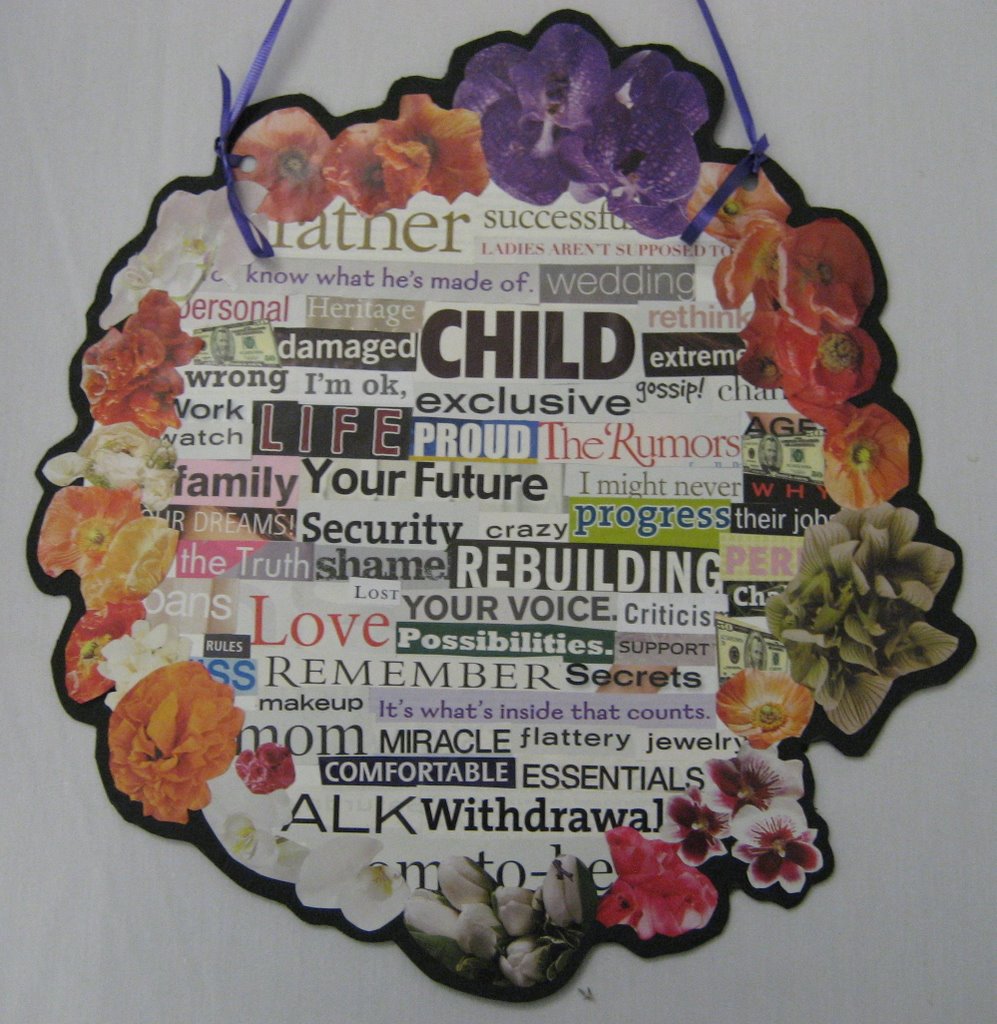
Why We Stay

Why We Stay

This collage represents all the various reasons someone decides to stay in an abusive relationship. The phrases are surrounded by flowers, which depict the way a victim uses these excuses to justify and defend the abusive relationship, making the relationship seem perfect to friends and family.

-- Danielle Murray, JD 2007

NB: One of our assignments was to complete a reflection project, which could be non-legal, personal reflections based on your interest in domestic violence issues. This project was intended to help tie together the domestic violence issues with our own personal development as a lawyer, and to reflect on those connections in a way to foster our personal and professional development.